Flooding, pipe failures, or storms create an obvious mess. The less obvious problem arrives after the visible water is gone: humidity. In Mesa, Arizona, where the air outside is usually dry, the indoor environment can remain damp for days or weeks after water damage restoration if you do not manage humidity deliberately. That lingering moisture feeds mold, ruins finishes, and invites structural deterioration. This article explains how to stabilize and control indoor humidity after a restoration project, with practical steps, equipment choices, and real-world trade-offs grounded in experience.
Why humidity matters after restoration
When technicians remove standing water and run industrial fans, a lot of moisture goes back into the air. Materials that seem dry on the surface — wall cavities, subfloors, insulation, furniture cores — can still hold water. Relative humidity tells a different story than surface dryness. Mold spores germinate when relative humidity exceeds roughly 60 percent for an extended period. Even shorter exposures at 50 to 60 percent raise the risk if temperatures are favorable. That risk translates into health complaints, stubborn stains, and expensive remediation later.
Mesa's climate makes one assumption dangerous: because the outside air feels dry, the indoor air will follow. It will not if the building envelope traps evaporated moisture. After a Water Damage Restoration Mesa AZ job, you must replace quick fixes with a controlled drying plan that holds conditions in a safe band until the structure is truly dry.
Targets and timelines that work
Aim for a steady indoor relative humidity between 40 and 50 percent while the structure is stabilizing. For occupied homes where people are sensitive to dry air, the upper end near 50 percent is reasonable. For rapid mold risk reduction, keep humidity under 60 percent at all times. Temperature plays a role too; higher temperatures accelerate mold growth when humidity is elevated, so monitor both.
Typical drying timelines vary. Light water exposure in a single room often reaches acceptable moisture levels in 48 to 72 hours with professional equipment. Moderate or hidden water intrusion, such as within wall cavities or under subflooring, can take one to three weeks of monitored drying. Structural drying that involves dehumidifiers plus localized heating and targeted air movement will almost always beat passive evaporation, but it requires active control.
Immediate actions that prevent trouble
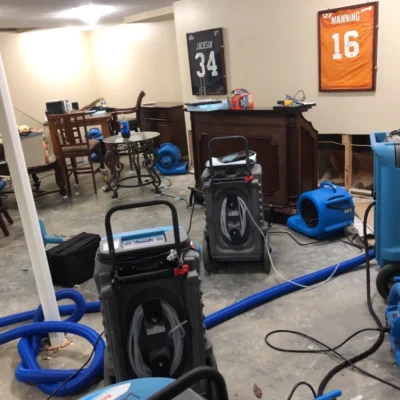
After technicians finish extraction and rough drying, take these immediate steps to keep the environment controlled. Follow this checklist within the first 24 hours.
Place calibrated hygrometers in several locations: living area, affected room, and near HVAC return. Run dehumidifiers sized to the space, not just a small consumer unit. Choose a commercial-grade unit rated in pints per day. Keep HVAC off unless the system will be used for dehumidification and has been inspected for moisture damage. Seal off heavily affected rooms to prevent moisture migration into clean areas. Schedule a follow-up moisture scan and review with your restoration contractor within 48 hours.Details and decisions behind each item
Place multiple hygrometers. One sensor is not enough. Put instruments at about 4 to 5 feet above the floor and away from direct airflow. A handheld moisture meter used by your restoration team will read material moisture content, which must come down to manufacturer or industry guideline levels before you rebuild. Track both hygrometer readings and material moisture logs.
Dehumidifier sizing matters. In local restoration work I see two mistakes repeatedly: undersized units run continuously and never reach the setpoint, or oversized units short-cycle and leave cold, clammy air. For most single-family rooms, a 40 to 90 pint per day dehumidifier is appropriate depending on temperature and size. For whole-house or heavily flooded basements, choose commercial units rated 100 pints or more per day. When in doubt, rent rather than buy. Rental shops and restoration companies in Mesa typically provide units with pumps that remove condensate to a drain or outside, which avoids daily bucket changes.
HVAC use is a trade-off. If the HVAC system passed inspection and the coil and ductwork are dry, running the system with the fan set to auto can help circulate air and condition it. Many modern systems have built-in dehumidification cycles that assist. However, a wet coil or contaminated ductwork will spread moisture and spores. If there is any doubt, turn the system off and use standalone dehumidifiers and axial fans until a qualified HVAC technician clears the system. This is a case where an upfront inspection prevents a later mold problem.
Sealing rooms reduces cross-contamination. Close doors, block under-door gaps temporarily, and place plastic sheeting across doorways when technicians are drying a specific area. That concentrates drying energy where it is needed and prevents moisture from migrating into clean furniture or HVAC returns.
Monitoring and logging: the heart of control
A drying plan without data is guesswork. Restoration pros log relative humidity, temperature, and material moisture at least twice daily while dehumidifiers run. You can do the same with a couple of reliable hygrometers and a handheld moisture meter.
Record these values each morning and evening:
- ambient relative humidity and temperature in the affected zone, ambient relative humidity and temperature in a clean area for reference, moisture content of key materials such as drywall base, subfloor, and wood framing.
Look for consistent downward trends. If relative humidity stagnates above 60 percent for more than 24 hours, call your contractor. If material moisture ceilings are not falling after several days despite stable ambient readings, technicians may need to set up targeted drying—sometimes by drilling small weep holes at baseboards to expose wet cavities for dry air or using injectidry systems to force dry air into wall cavities.
Equipment: what to choose and why
Dehumidifiers Choose units designed for restoration work when drying a structure. Look for commercial water damage cleanup Bloque Restoration units with durable compressors, continuous drain capabilities, and the ability to operate across a range of temperatures. In a hot and dry climate like Mesa, desiccant dehumidifiers are less common after flooding because refrigerant units are efficient when the ambient temperature is above about 60 degrees Fahrenheit. Desiccant units perform better in low temperatures but are more expensive to run. For most Mesa restorations, refrigerant dehumidifiers strike the right balance.
Fans and air movers High-velocity air movers focus evaporation at wet surfaces. Use enough to create gentle cross-flow without creating turbulence that spreads dust or spores. Point air movers so airflow passes evaporation surfaces toward the dehumidifier intake. Running axial fans without dehumidification simply moves moisture around; pairing is essential.
Moisture meters and thermal imaging A pin-type meter measures material moisture, while non-penetrating meters give relative moisture maps. Thermal cameras help locate cold spots where moisture accumulates. These tools save days of guesswork and prevent unnecessary demolition.
HVAC and ductwork If ducts were flooded or contaminated, clean and service them before returning to normal use. A small investment in coil cleaning and duct inspection prevents reintroducing moisture into the house.
Costs and rental choices
Renting equipment is common because recovery often needs powerful machinery for a relatively short period. Typical rental costs in this region range from roughly $50 to $150 per week for small commercial dehumidifiers and $150 to $300 per week for larger whole-house units. Buying a quality residential dehumidifier runs from $300 to $1,000, while professional-grade machines sell for $1,500 to $3,000 or more. Budget for electrical load: several dehumidifiers and air movers can increase usage by hundreds of watts each, so expect higher power bills during the drying period.
Long-term moisture control and rebuild decisions
Once hygrometers show steady RH in the target range and material moisture logs indicate acceptable levels, you transition from emergency drying to longer-term prevention. This is when reconstruction choices make the biggest difference.
Choose moisture-tolerant materials in vulnerable areas, such as mold-resistant drywall, cement board on lower walls, and engineered flooring with better dimensional stability. In bathrooms and laundry rooms consider tile or sealed surfaces instead of porous base materials. Replace insulation if it remains above acceptable moisture levels because wet insulation holds moisture and insulation value is compromised.
Do not box in the problem by closing drywall over slightly damp framing. That creates a perfect mold incubator. Wait for professional verification of dryness or use drying mats and conditional dehumidification during rebuild if necessary.
Behavioral and operational habits that sustain dryness
Simple occupant habits have outsized effects. Run exhaust fans while showering, keep attic and crawlspace vents clear, and maintain consistent HVAC filters. If you detect a musty smell after reconstruction, do not ignore it. A smell often precedes visible mold.
Install permanent humidity monitoring. Smart hygrometers that log data and alert you when RH drifts outside set thresholds are inexpensive and invaluable. Place one in the main living area and one in the affected room for the first year after restoration.
When to call specialists
Small, contained jobs can be handled with rented equipment and careful monitoring. Call licensed restoration contractors for any of the following:
- more than one room affected, suspected contamination by sewage or hazardous materials, visible mold larger than a small patch, structural materials failing or not drying after 72 hours of professional drying.
A reputable Water Damage Restoration Mesa AZ contractor like Bloque Restoration will provide a drying plan, daily logs, and clear criteria for when materials pass inspection. Expect them to explain trade-offs, such as faster drying with higher power consumption, and to justify choices with data instead of guesswork.
Real trade-offs and edge cases
You will face decisions where there is no single right answer. For historic homes, preservation of finishes may mean slower drying and cautious ventilation to protect delicate materials. That increases mold risk, so staff must use containment and antimicrobial strategies carefully. In rental properties, tenant comfort and fast turnaround create pressure to rebuild quickly. A fast rebuild without verified dryness often costs more in the long run.
Another example: if your HVAC system provides excellent whole-house dehumidification but needs a costly replacement to be used safely, the choice is rebuild now and risk problems, or delay reconstruction while renting equipment. I have seen homeowners opt to rent dehumidifiers and finish in a few weeks rather than replace an HVAC system prematurely. Both options are defensible if documented and monitored.
Why a local touch matters
Local contractors understand Mesa’s seasonal swings and typical building assemblies in the area. Water Damage Restoration Mesa AZ professionals who work here know that monsoon season spikes the risk window, and that stucco exteriors and slab-on-grade foundations behave differently than framed basements common in other regions. Bloque Restoration and similar local teams integrate that knowledge into drying plans, choosing equipment and setting dehumidification targets that fit the local climate and building stock.
Final practical checklist for long-term prevention
Maintain a permanent humidity target near 40 to 50 percent with smart hygrometers and alarms. Inspect and service HVAC and ductwork annually, clean coils, and change filters regularly. Choose moisture-resistant materials when rebuilding in bathrooms, kitchens, and laundry areas. Ventilate when cooking or showering, and use exhaust fans that vent outdoors. Schedule a professional moisture verification before closing walls and before final occupancy.Keeping humidity in check after a restoration is both technical and observational. Instruments provide the numbers, but judgment from experience ties them to action. Track the data, match equipment and materials to the problem, and do not cut corners on verification. With deliberate steps and sensible investments you will protect your home from the hidden damage that often arrives after the water is gone.
If you want a second opinion on readings or a drying plan specific to your property, local specialists can review logs and make targeted recommendations. Water Damage Restoration Mesa AZ teams like Bloque Restoration offer moisture verification services and can help prioritize repairs and prevention so you avoid costly returns.
Bloque Restoration
1455 E University Dr, Mesa, AZ 85203, United States
+1 480-242-8084
[email protected]
Website: https://bloquerestoration.com